
Ant Invasion? The Indianapolis Homeowner's Tactical Guide
Ants are the #1 nuisance pest for Indianapolis homeowners. From the structural threats of Carpenter Ants in Clermont to the foul-smelling Odorous House Ants in Avon , a small "scout" in your kitchen can turn into a full-scale invasion in 48 hours. This comprehensive guide covers the specific species found in Marion County, why they choose your home, and how Buzz Kill Pest Control stops them permanently.
1. The "Big Four" Ants of Central Indiana
Before you can kill the colony, you must identify the enemy. Central Indiana is home to over a dozen species, but four cause 90% of the service calls we receive at Buzz Kill.
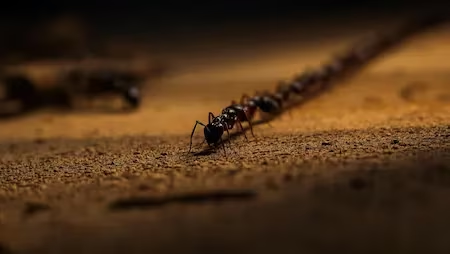
- Carpenter Ants (The Structural Threat): One of the largest ant species in the US. These ants are typically black and range from 1/4 to 1/2 inch. Crucial Fact: They do not eat wood like termites. Instead, they excavate "galleries" to nest. If you see sawdust-like piles (frass) near your baseboards, you likely have a structural infestation.
- Odorous House Ants (The "Sugar Ant"): Small (1/16 to 1/8 inch) and dark. They are famous for the rotten coconut smell they emit when crushed. These ants are sugar-seekers and will form long, unwavering lines toward your pantry or pet food bowl. They are notorious for "budding," meaning if you spray them with cheap store-bought chemicals, the colony will panic and split into three new colonies.
- Pavement Ants (The Slab Invaders): These tiny, dark brown ants nest under foundation slabs and sidewalks. They are the ones you see "fighting" in the cracks of your driveway. In the spring, they enter through basement cracks or under-floor heating ducts, making them a major problem for ranch-style homes.
- Thief Ants (The Grease Seekers): Extremely tiny (1/16 inch), often mistaken for Pharaoh ants. They get their name because they nest near other ant colonies to steal their food. Unlike sugar ants, these prefer greasy, high-protein foods. They are notoriously hard to bait because they ignore standard sugar-based traps.
2. Tactical Identification: Ants vs. Termites
Homeowners often panic when they see "winged ants" inside. In Indianapolis, identifying whether you have a flying ant or a termite swarmer is a $5,000 difference. Look for these three tactical markers:
- The Waist: Ants have a pinched, narrow "wasp-like" waist. Termites have a thick, straight body with no visible waist.
- The Antennae: Ant antennae are "elbowed" (they have a sharp bend). Termite antennae are straight and look like a string of tiny beads.
- The Wings: Ants have two pairs of wings of unequal length (the front pair is much longer). Termites have four wings of equal length that break off easily.
3. The Indianapolis Seasonal Ant Calendar
Our Indiana climate dictates ant behavior. Understanding the "battlefield" by month allows for better prevention.
| Season | Ant Behavior | Homeowner Strategy |
|---|---|---|
| Spring | Colonies wake up. Heavy rain drives Pavement Ants into basements. | Seal foundation cracks and clear gutters. |
| Summer | Peak foraging. Heat makes ants seek moisture in bathrooms/kitchens. | Keep counters dry and store sugar/pet food in airtight bins. |
| Fall | Seeking warmth. Ants move toward heated wall voids for winter. | Check window seals and door sweeps for gaps. |
| Winter | Dormancy outdoors. Indoor "Satellite" nests remain active. | If you see ants in winter, the nest is inside your walls. |
4. Why DIY Ant Control Fails in Indiana
Many homeowners in Indianapolis reach for a can of "Raid" the moment they see a trail. This is a tactical error. Most retail sprays are "repellents." They kill the few ants you see but alert the rest of the colony to a threat. This triggers Budding —the queen begins laying eggs at 3x speed and sends workers to create satellite nests in other parts of your house. By spraying the kitchen, you might actually drive the ants into your bedroom or attic.
5. The Buzz Kill Tactical Method: Total Colony Elimination
We don't just spray; we excavate the problem. Our process is designed for the specific environment of Central Indiana.
- Phase 1: Advanced Thermal & Visual Inspection: We track ant "highways" back to the source. This often involves checking the "wet wall" where plumbing runs or locating satellite nests in rotting tree stumps within 20 feet of the foundation.
- Phase 2: Non-Repellent Transfer Technology: We use specialized baits that ants find delicious. Because the treatment is non-repellent, the ants don't know it's there. They walk through it, coat their bodies, and carry it back to the Queen. This "Trojan Horse" effect is the only way to kill a colony of 50,000+ ants.
- Phase 3: Structural Exclusion: Once the colony is dead, we prevent the next one. We seal utility penetrations and gaps that act as "open doors" for new scouts.
6. Frequently Asked Questions (FAQ)
Q: Are ants in Indianapolis dangerous?
A: Most are just "nuisance" pests, but Carpenter Ants can compromise the structural integrity of your home's framing over time. Pharaoh ants can also spread bacteria like Salmonella if they crawl over food prep surfaces.
Q: Why do I have ants in a clean house?
A: Ants don't care about "clean" as much as they care about "access." A tiny drop of condensation on a pipe or a microscopic crumb under a toaster is enough to support a scout. In Indy, high humidity alone is often enough to attract them.
Q: Is your ant treatment pet-safe?
A: Yes. At Buzz Kill, we use targeted baiting and precision crack-and-crevice treatments. We place our products in areas where your pets and children cannot reach them, such as behind wall plates or deep within crawl spaces.
Read more about our general pest control service or schedule your free no obligation inspection today.
References and Authoritative Sources
- Purdue Extension: Carpenter Ants . Purdue University Entomology.
- Got Pests? Control Them Safely . U.S. Environmental Protection Agency (EPA).


Read Customer Testimonials or Share "Ant Control Guide" on social media